Choosing the right Black Cocktail Table is not only a matter of color. It affects guest movement, brand presentation, cleaning time, and rental value.
Industry research supports a practical approach. Grand View Research’s 2024 contract furniture analysis highlights durability, flexibility, and space efficiency as important commercial furniture factors. These qualities matter at weddings, hotel receptions, trade shows, and restaurant events. The American Rental Association’s rental outlook also emphasizes utilization, maintenance, replacement planning, and total lifecycle cost. A low-priced table may seem attractive, but frequent repairs can quietly reduce its value.
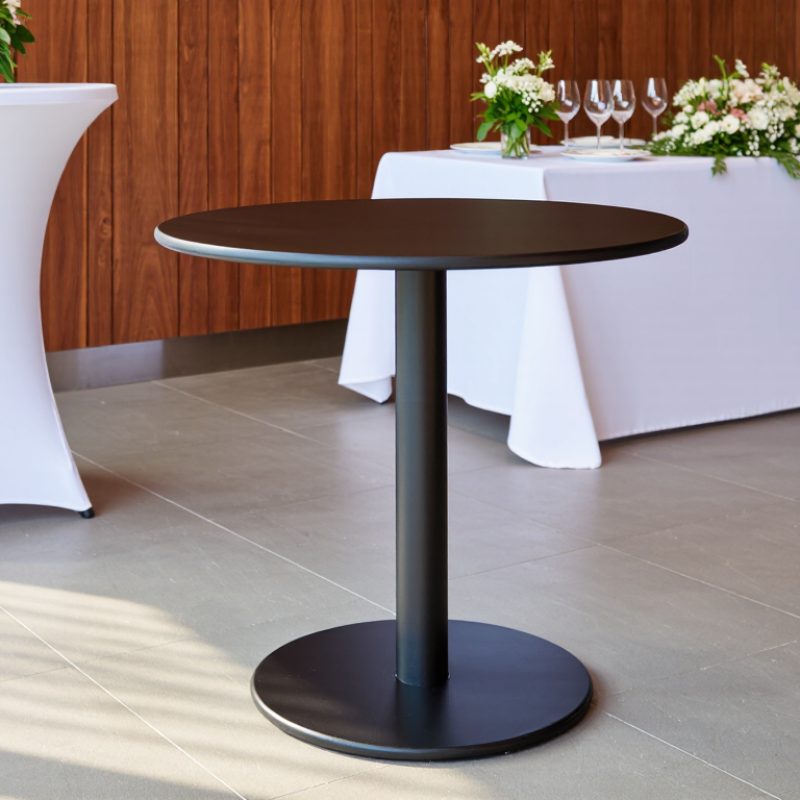
Start with the event environment. A 30-inch round table suits standing conversations and compact cocktail areas. A 36-inch model offers more surface space for glasses, menus, or small floral arrangements. Check the table’s height, base stability, edge design, and weight before buying. A matte black laminate can hide fingerprints better than a glossy finish, although it may show dust under strong venue lighting. That detail is easy to miss.
Think about the floor, too. Wide bases may protect stability but interrupt guest circulation. Look for non-marking feet and a surface that tolerates commercial cleaning products. Relevant standards from BIFMA can help buyers assess commercial furniture durability, though certification alone does not guarantee perfect performance. It is only one reference point.
I would also test the table in person. Photos can make a narrow pedestal appear substantial. They can mislead. Compare samples beside white linens, warm wood, and metallic décor. The best Black Cocktail Table should look refined, remain steady, and work repeatedly without demanding excessive maintenance. It may not be the most dramatic choice, but reliability often creates the stronger impression.
How to Choose the Right Black Cocktail Table?
Define the Use: Cocktail Table Heights Typically Range from 40–42 Inches
A black cocktail table should fit the event, not only the room’s color scheme. Cocktail tables usually stand 40–42 inches high. This height supports standing conversations, light food service, and brief laptop use. It is not ideal for long meals. Pair it with stools having seats around 28–30 inches high. The two-inch gap can change comfort noticeably.
Anthropometric data supports a flexible approach. The U.S. Army’s ANSUR II database records measurements from 6,068 adults. Its findings show meaningful differences in standing elbow height across body sizes. Therefore, a fixed 42-inch table may suit taller guests better. A 40-inch table often feels more approachable for mixed groups. ANSI/BIFMA furniture standards focus on performance and safety testing, not one universal cocktail-table height. That distinction matters.
Tips: Measure the average user before ordering. Place a sample table beside the intended stools. Check whether elbows rest naturally, without raised shoulders. Leave enough clearance for knees and bags. A matte black surface hides fingerprints better than glossy finishes, but it may show dust under bright lighting. I have found that lighting changes the perceived height, too. That detail is easy to miss. A practical setup may still need adjustment after real guests arrive.
| Selection Dimension | Recommended Specification | Why It Matters | Best Use |
|---|---|---|---|
| Primary Use | Standing-height socializing, receptions, and networking | A taller surface allows guests to set down drinks comfortably while standing. | Cocktail parties, trade shows, weddings, and corporate events |
| Overall Table Height | 40–42 inches (101.6–106.7 cm) | This is the common range for cocktail or bar-height event tables and supports a comfortable standing posture. | Standing receptions and short-duration gatherings |
| Seated Alternative | Approximately 28–30 inches high | Standard dining height is more suitable when guests need to sit for meals or extended periods. | Dinners, meetings, cafés, and seated receptions |
| Tabletop Diameter | 24–36 inches (61–91.4 cm) | A compact round top provides space for drinks and small plates without taking over the room. | Small to medium event areas |
| Larger Surface Area | 36–42 inches (91.4–106.7 cm) in diameter | The larger top accommodates shared appetizers, décor, and several beverages. | Large receptions and buffet-adjacent gathering areas |
| Guest Capacity | About 2–4 standing guests per table | Capacity depends on tabletop size, the number of items placed on it, and how much elbow room guests need. | Networking zones and informal conversation areas |
| Clearance Around Table | Allow at least 36 inches (91.4 cm) for a primary walkway | Adequate clearance helps guests move safely and keeps entrances and service routes accessible. | Busy venues and high-traffic floor plans |
| Base Stability | Wide, weighted base with level-adjustment feet | A stable base reduces wobbling and helps prevent accidental tipping when guests lean on the tabletop. | Public events and high-use environments |
| Black Finish | Durable powder-coated or sealed black surface | A durable finish is easier to clean and generally resists everyday scuffs better than an untreated surface. | Frequent indoor use and carefully managed outdoor use |
| Material Choice | Metal base with laminate, engineered-wood, or solid-wood top | The material affects weight, appearance, durability, maintenance, and portability. | Choose according to transport needs and event frequency |
| Portability | Folding legs or a knock-down design for regular transport | Collapsible components simplify storage, vehicle loading, and venue changes. | Rental operations and mobile event teams |
| Accessibility Consideration | Pair 40–42 inch tables with lower accessible surfaces | Standing-height tables alone may not meet the needs of every guest or every event layout. | Inclusive public, corporate, and community events |
How to Choose the Right Black Cocktail Table?
Measure the Space: Preserve a 36-Inch Minimum Clear Circulation Route
Before choosing a black cocktail table, measure the open floor around it. Keep at least 36 inches between the tabletop’s outer edge and nearby seating, walls, or cabinets. The ADA 2010 Standards identify 36 inches as the minimum clear width for many accessible walking routes. This is a safety baseline, not a comfort guarantee.
The National Kitchen & Bath Association’s Planning Guidelines also use 36 inches for general walkways. I apply that principle in living rooms and hospitality spaces. Mark the table’s full footprint with painter’s tape. Include the legs, not only the top. Then walk around it while carrying a tray. Awkward contact often reveals poor planning.
A black surface can visually reduce openness, especially beside dark flooring or heavy seating. Choose a smaller diameter if the taped outline interrupts the route. Leave more than 36 inches near doorways, because traffic changes direction there. A 42-inch clearance may feel noticeably easier. Measure again after placing the sofa and chairs. I have trusted an empty-room measurement before, and regretted it. Furniture shifts the real circulation pattern. A low-profile table may look elegant, but sharp corners and crowded paths still create daily friction.
How to Choose the Right Black Cocktail Table?
A black cocktail table can anchor a small sitting area without making it feel crowded. For compact guest seating, a 24- to 30-inch tabletop usually offers the right balance. This size gives two to four guests room for drinks, small plates, and conversation. Measure the seating first, not the empty floor. The table should sit close enough to reach comfortably while leaving clear walking space around the chairs. I prefer testing the layout with cardboard before ordering. It reveals awkward corners quickly.
A 24-inch table suits two lounge chairs or a narrow conversation nook. It keeps the center open and feels visually light. A 26- to 28-inch top works well between a compact sofa and one chair. Choose 30 inches when guests need more serving space, but check that knees do not hit the base. Tabletop height matters too. Around 16 to 18 inches often aligns with lounge seating, though cushions vary. Measure the actual seat height. Printed dimensions can mislead.
With black finishes, proportion becomes even more important because dark surfaces draw attention. A thin edge can make a 30-inch table appear less bulky, while a heavy pedestal may overwhelm a small room. Look for a stable base, smooth corners, and an easy-to-clean surface. I once chose a larger top for flexibility, but it restricted movement. That was a useful mistake. Recheck the room from standing and seated viewpoints before deciding. Leave enough space for hands, feet, and an easy exit.
A black cocktail table should look refined, but appearance cannot prove durability. Compare the complete table against relevant ANSI/BIFMA performance criteria. These criteria examine strength, stability, impact resistance, and repeated use. Material alone is not enough. Weight matters.
Steel frames often provide strong joint support and resist racking during everyday movement. However, thin steel may bend after a hard impact. Solid wood offers a warm appearance and reliable stiffness, but moisture can cause swelling or movement. Engineered wood with a durable laminate finish can control costs and provide a consistent black surface. Check the edge quality carefully. A weak edge may chip first. Tempered glass creates a lighter visual effect, yet fingerprints and corner damage need attention. Transparency does not equal strength.
During selection, ask for test documentation showing the table configuration, applied loads, and test date. ANSI/BIFMA results usually apply to the tested assembly, not every similar-looking product. A wider base normally improves stability, especially on carpet or uneven flooring. Press the tabletop gently from several directions. It should not wobble, twist, or produce clicking sounds. Inspect welds, fasteners, leveling glides, and the connection between the top and frame. I have seen attractive tables fail because one joint loosened early. That detail is easy to miss. Also, a very heavy table is not automatically safer; poor balance can still create a tipping risk. Choose the material combination that matches traffic, cleaning habits, and expected loading.
Choosing a black cocktail table is less about color than surface behavior. In rooms I have furnished, gloss black catches pendant light and makes a small table feel brighter. It also shows fingerprints, dust, and fine scratches quickly. Matte black absorbs more light, creating a quieter appearance. Yet it can look flat beside dark seating. Satin finishes often offer a useful middle ground, with gentle reflection and easier daily maintenance.
Test samples under the room’s actual lighting. View them near a window, beneath warm lamps, and beside the sofa. A finish that looks elegant online may reveal gray rubbing marks in daylight. Dragging a clean glass carefully across a sample can reveal visible contact marks. It is not a complete durability test. Ask for the coating’s care instructions and scratch-resistance data when available. Reliable sellers should explain the finish, substrate, and repair limits clearly.
Consider use patterns, too. A busy living room may suit satin or textured black better than piano-like gloss. Textured surfaces hide minor marks, but their grooves can collect crumbs. I once favored a deep matte finish and regretted it near a bright window; it swallowed too much light. That mistake still matters. Choose the black that behaves well in your space, not merely the black that looks perfect in a photograph.
Select black finishes by comparing gloss, scratch visibility, and light reflection. Gloss values are representative 60° gloss-unit readings based on ASTM D523 measurement practice; scratch and reflection ratings use a practical 1–5 comparison scale.
Matte finishes generally reduce glare and make minor surface marks less noticeable, while high-gloss finishes create stronger reflections and can make fingerprints or scratches easier to see. Choose satin or semi-gloss for a balanced appearance.