How to Choose the Perfect Antique Dressing Table for Your Home?
Choosing the perfect Antique Dressing Table for your home can be an enriching experience. These timeless pieces offer charm and character that new furniture often lacks. However, the journey to find the right one can be daunting. You'll encounter various styles, materials, and price points.
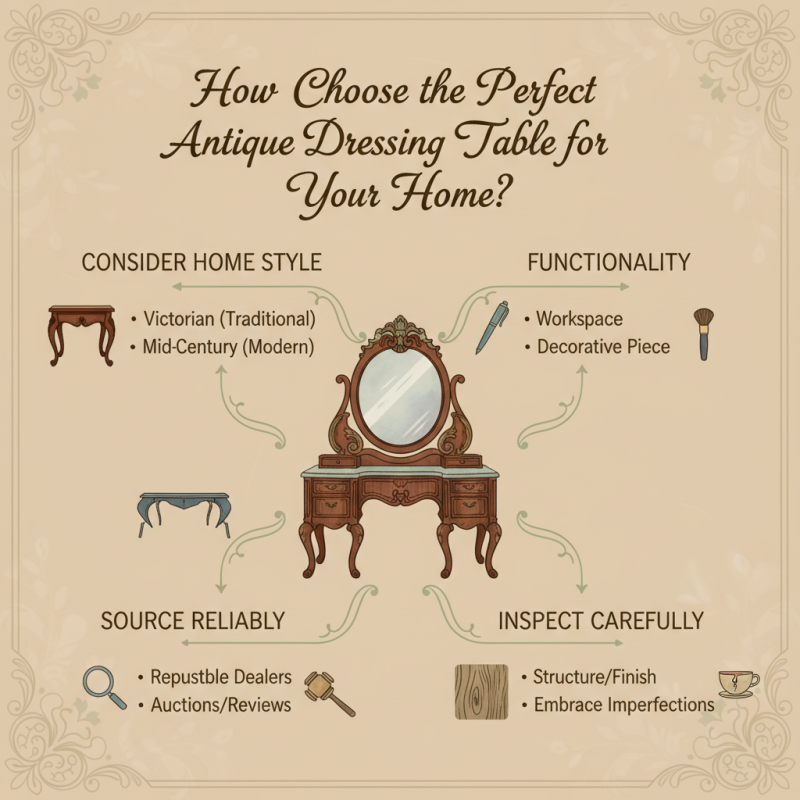
When selecting an Antique Dressing Table, consider your home’s style. A Victorian table might complement a traditional setting. In contrast, a mid-century piece could suit a modern aesthetic. Think about functionality too. Will it serve as a workspace, or simply a decorative piece?
Finding a reliable source is crucial. Look for reputable antique dealers or auctions with good reviews. Inspecting structures and finishes is essential. Each table has its story, and a careful selection ensures that it fits seamlessly into your life. Embrace the imperfections—it’s part of their history.
Understanding the Different Styles of Antique Dressing Tables
When it comes to antique dressing tables, understanding the various styles is crucial. These pieces come in multiple designs, each reflective of a particular period. The Victorian style, for instance, is known for its ornate carvings and rich, dark woods. These tables often feature intricate detailing, making them stand out as statement pieces in any room.
On the other hand, Art Deco dressing tables present a more streamlined appearance, focusing on geometric shapes and bold colors. They often use materials like chrome and glass, lending a modern touch to traditional aesthetics. It's important to consider how these differences will fit into your home's style.
While searching for the perfect table, you might feel overwhelmed by the choices. Not every style will suit your space. Sometimes a table that looks beautiful might not be functional or too large for your room. Reflect on what design elements resonate with you. Choose a piece that not only adds to your decor but also meets your everyday needs. Each antique table has a story; consider which one speaks to you.
Identifying Your Space and Size Requirements for a Dressing Table
When choosing an antique dressing table, understanding your space and size is crucial. Measure the area where you plan to place the table. Consider the table’s dimensions and how they will align with your existing furniture. A well-proportioned piece can enhance your room's aesthetics. Too large, and it may overwhelm the space; too small, and it may look out of place.
Think about functionality too. Will you use it for makeup, or will it serve as a decorative piece? If you have limited room, a compact design might be your best option. Don’t forget to check the height. A table that’s too low or too high can be uncomfortable for daily use. Visualize how you will interact with it. How often will you open the drawers? Consider the flow of movement in your space.
It's essential to select a style that complements your home. Reflections of your personality and taste should guide your choice. Yet, perfection in aesthetics is often subjective. What looks great to one person may not resonate with another. Allow yourself to explore imperfections in design. A unique flaw can add character. This process may take time, but that’s okay. Trust your instincts, and enjoy the journey of finding the perfect antique dressing table.
How to Choose the Perfect Antique Dressing Table for Your Home?
| Dimension |
Description |
Recommended Size (in inches) |
Room Size Compatibility |
| Height |
The vertical measurement of the dressing table. |
28-32 |
Suitable for small and medium-sized rooms. |
| Width |
The horizontal span, which affects storage and usability. |
36-48 |
Ideal for larger spaces; can fit in spacious bedrooms. |
| Depth |
Front to back measure, affecting how much floor space is used. |
18-24 |
Fits well in compact spaces without crowding. |
| Style |
The design and aesthetic appeal of the table. |
Victorian, Louis XVI, Art Deco |
Compatible with various decor styles. |
| Material |
The substance used to make the table; affects durability and look. |
Wood, Glass, Metal |
Depends on individual taste and room ambience. |
Evaluating Material Quality and Craftsmanship in Antiques
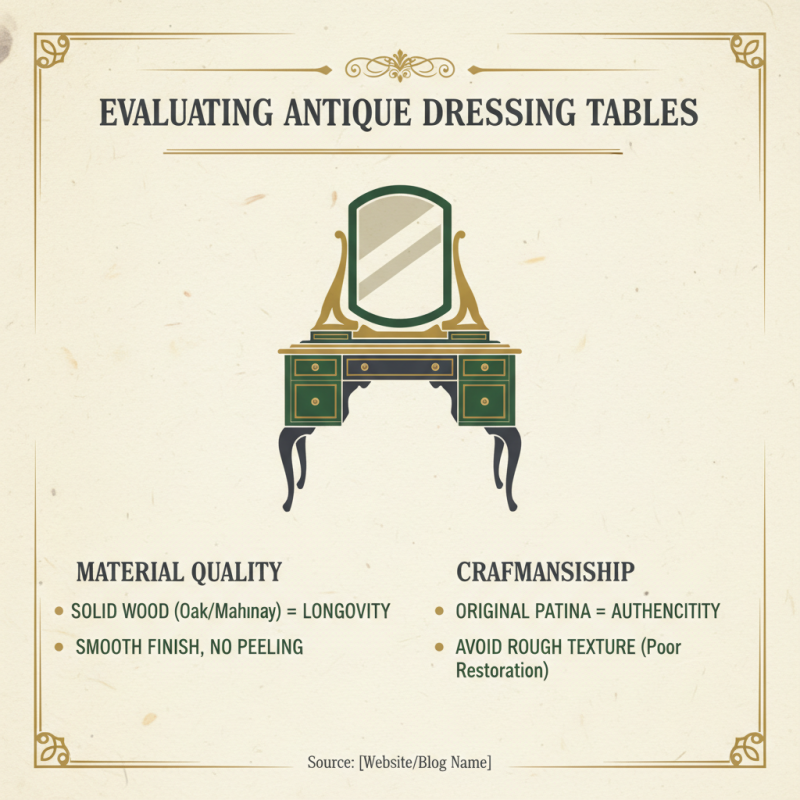
When selecting an antique dressing table, the quality of materials is paramount. Solid wood, like oak or mahogany, ensures longevity. Inspect the finish; it should be smooth and free of peeling. If you notice a rough texture, it may indicate poor restoration work. Look for the original patina, which adds character and authenticity.
Craftsmanship is another key aspect. Examine joints, such as dovetails—these should be tight and well-made. Poorly crafted joints may weaken the table. Pay attention to details, such as ornate carvings or inlays. These unique features often reveal the skill of the craftsman. They can significantly enhance the table's overall value.
Tips: Always carry a magnifying glass. It helps reveal hidden details and flaws. Check for signs of repair, which can affect value. Take your time to appreciate the craftsmanship. Choosing an antique is not just about aesthetics; it requires a discerning eye and thoughtful consideration.
Considering Functional Features and Accessories for Your Dressing Table
When choosing an antique dressing table, consider its functional features. The size and design play a crucial role. A table that fits your space without overwhelming the room is key. Reports suggest that 40% of homeowners prefer a compact design. This allows for a comfortable flow in the room. A dressing table should serve multiple purposes, so look for one with ample storage. Drawers and shelving can keep your cosmetics and accessories organized.
Accessories are equally important. Mirrors should complement your table style. A well-placed mirror can create an illusion of space. A recent survey showed that 65% of users value a good quality mirror as essential. Lighting should also be considered. Soft, warm lighting can enhance the overall ambiance and functionality. Think about how you plan to use the dressing table. It’s not just a beautiful piece but a daily utility. Reflect on how to make it a space that inspires you. A little creativity can elevate your dressing area's charm.
Choosing the Perfect Antique Dressing Table: Functional Features and Accessories
Tips for Maintaining and Restoring an Antique Dressing Table
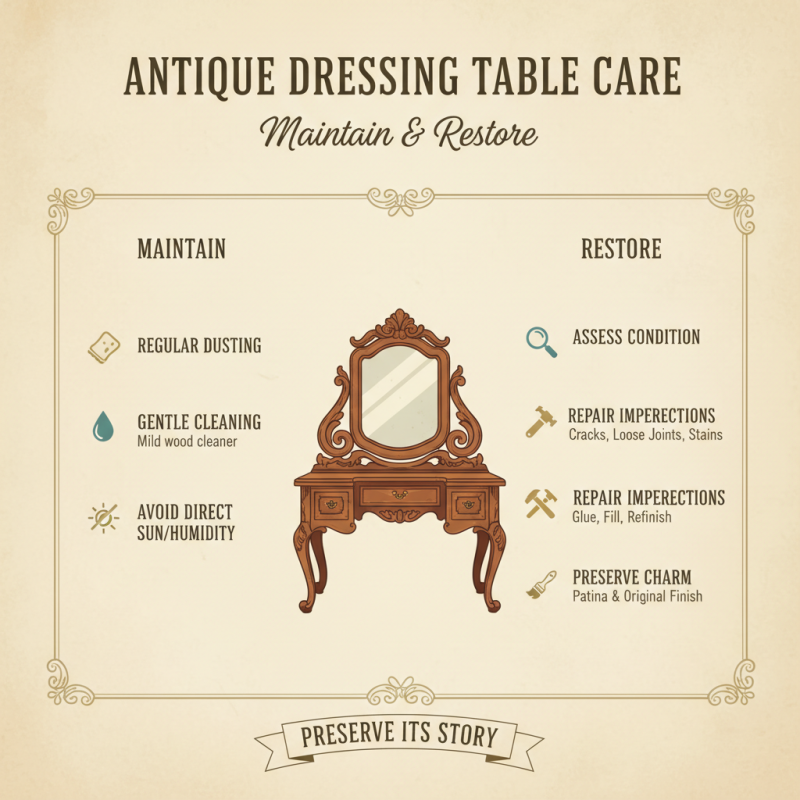
Maintaining and restoring an antique dressing table requires careful attention. Begin by assessing the condition of the piece. Look for cracks, loose joints, or stains. These imperfections tell a story, but they also require action to preserve the table's charm.
Regular cleaning is essential. Use a soft cloth to dust away debris. Avoid harsh chemicals that can damage the finish. Instead, consider a mix of mild soap and water for deeper cleaning. Test any solution on a small area first. It’s a wise approach to prevent mishaps.
For restoration, seek professional advice if you're unsure. Sometimes, preserving the original patina is more desirable than a complete overhaul. Minor repairs can often be done at home, such as tightening screws or fixing minor scratches. Remember, every dent adds character; not every flaw needs to be fixed. Carefully consider what aspects of the table should be restored versus what should remain untouched.