Leave Your Message

How to Choose the Right Bed Side Cabinet in 2026?

Choosing a Bed Side Cabinet in 2026 is less about following a trend and more about making your nightly routine easier. Measure the space beside your bed before browsing. Check the mattress height, available floor clearance, and how far drawers can open. A cabinet that looks compact online may block a wardrobe door in a real room. Small details matter.

Interior designer Nate Berkus is known for creating personal, functional spaces. Rather than invent a direct quotation, this guide uses an original principle inspired by practical interior design: “Choose the piece that supports your daily routine, not just the room’s photograph.” Treat that as guidance, not a verbatim quote. Start with what you actually keep nearby: a book, glasses, medication, or a charging cable. One shallow drawer may be enough. Or not.

Think about materials and upkeep, too. A pale wood finish can brighten a dim corner, while a sealed surface is easier to wipe after a spilled glass of water. Check drawer movement and stability where possible; product photos cannot show how a handle feels at midnight. Style matters, but so does access. There is no perfect cabinet for every bedroom, and a tidy specification list can still miss the feel of a room. Use measurements, product details, and your own routine together. That is a more dependable place to begin.
How to Choose the Right Bed Side Cabinet in 2026?

Identify Your Bedside Storage Needs and Daily Habits

How to Choose the Right Bedside Cabinet in 2026?

Your bedside cabinet should match your real evening routine, not an imagined lifestyle. I once chose a beautiful narrow table and underestimated my storage needs. The drawer quickly filled with reading glasses, charging cables, tissues, and a notebook. Measure these daily items before choosing furniture.

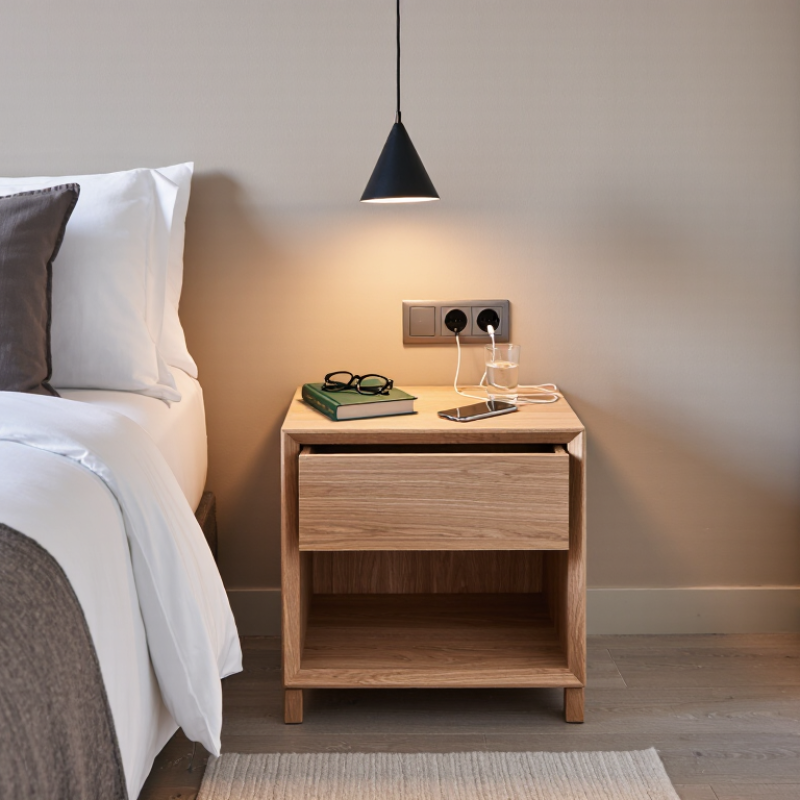
Watch your habits for three nights. Do you reach for water, a book, or a sleep mask? Do cables fall behind the bed? A cabinet with one drawer and an open shelf suits visible essentials. A deeper drawer protects private items from dust. Built-in cable openings can prevent tangled wires, but check their position beside your outlet.

Keep the cabinet near mattress height, ideally within five centimeters. This makes reaching safer and reduces awkward shoulder movement. Allow enough clearance for drawers to open fully. Around 45 centimeters beside the bed usually feels comfortable, though small rooms may require compromise. Choose smooth, durable surfaces if you place a warm cup or water glass nearby. I prefer rounded edges in narrow spaces, especially when moving around at night. Still, one detail is easy to overlook: too much storage can encourage clutter. A smaller cabinet may force better habits, but that depends on your routine.

How to Choose the Right Bedside Cabinet in 2026? — Identify Your Bedside Storage Needs and Daily Habits
Daily Habit or Need Items Commonly Stored Recommended Cabinet Width Recommended Cabinet Depth Recommended Storage Layout Useful Features Key Selection Check
Minimal bedside routine Phone, reading glasses, water bottle, alarm clock One open shelf or one drawer with a clear tabletop Compact footprint, smooth drawer runners, easy-clean surface Choose a small cabinet if the bedside area is narrow and only a few items need storage.
Frequent reading before sleep Books, e-reader, glasses, bookmark, reading lamp One drawer plus an open lower shelf Stable top, cable opening, shelf tall enough for books Measure the lamp base and allow enough tabletop space for both the lamp and personal items.
Regular medication storage Daily medicines, tissues, water, health accessories Two enclosed drawers or a drawer-and-door configuration Easy-to-open hardware, clearly separated compartments, stable construction Keep medicines in accordance with their storage instructions and away from children when necessary.
Device charging at night Phone, smartwatch, tablet, charging cables, power adapter Top drawer or open shelf with a rear cable-management area Built-in cable port, ventilation space, accessible power outlet Avoid covering ventilation openings and keep electrical equipment away from spilled liquids.
Large personal storage requirement Books, cosmetics, journals, headphones, accessories, small electronics Two or three drawers, or drawers combined with a cabinet door Full-extension drawers, adjustable shelf, reinforced top panel Check the fully opened drawer position to ensure it does not obstruct the walking path.
Shared bedside storage Two phones, two glasses cases, books, tissues, water bottles Two equal drawers or separate storage zones Symmetrical compartments, wide tabletop, durable surfaces A wider cabinet can reduce clutter but should still leave a comfortable passage beside the bed.
Small bedroom or limited floor space Essential personal items only One narrow drawer or wall-mounted shelf unit Wall-mounting option, rounded corners, shallow depth Confirm wall strength, mounting hardware compatibility, and clearance from the bed frame.
Need for a larger tabletop Table lamp, water, books, decorative objects, glasses One drawer with a spacious open tabletop Scratch-resistant finish, anti-slip feet, good weight distribution The tabletop should remain reachable from a lying or seated position without excessive stretching.
Child or older-adult accessibility Glasses, tissues, water, books, frequently used personal items Open shelf or shallow drawer positioned at easy reach height Rounded edges, stable base, soft-close hardware, low tipping risk Anchor tall or narrow furniture where appropriate and keep frequently used items within comfortable reach.
Preference for a clean, hidden appearance Chargers, documents, cosmetics, books, personal accessories Two or more enclosed drawers or a door cabinet Handleless fronts, soft-close hinges, internal dividers Select compartments according to item size so that storage remains organized rather than overfilled.

Measure Your Space and Match the Cabinet to Your Bed

Measure the bed before browsing cabinets. Record mattress height from the floor, frame width, and the gap available on each side. The International Sleep Products Association’s mattress-size reference lists a queen mattress at 60 inches wide and a king at 76 inches. Those dimensions show why a cabinet that looks modest online may crowd a narrow room.

Aim for a cabinet top close to mattress height, so a book or glass stays within easy reach. A surface a little lower can work; a tall cabinet may feel awkward beside a low bed. Measure the cabinet’s full width, including knobs, and mark its footprint with painter’s tape. Open nearby drawers and doors, too. Small details matter. A cabinet can fit on paper but block a closet or pinch the walking route.

Think about how you use the space. A lamp, phone, and water glass need more surface area than a phone alone, while drawers need clearance to open. In a tight bedroom, a narrower cabinet with vertical storage may be the better match. In a larger room, a wider piece can balance a broad bed. I still find height easy to misjudge from photos; check measurements against the actual mattress, not the bed frame.

Compare Materials, Construction, and Storage Options

How to Choose the Right Bedside Cabinet in 2026?

Material choice should begin with your bedroom’s real conditions. Solid wood feels warm and can be repaired, but it may expand near a humid window. Veneer offers a stable surface with less material use, although damaged edges are harder to restore. Metal resists scratches and supports slim designs, yet it can feel cold at night. The UNEP 2023 Global Status Report says buildings and construction produced 37% of global energy-related and process-related emissions in 2022. Choosing durable materials matters.

Construction deserves closer inspection. Open the drawer and check whether it moves smoothly without side-to-side wobble. Look for reinforced joints, a stable back panel, and adjustable feet. A cabinet that feels light is not automatically weak. Poorly balanced weight is the real problem. EPA guidance reports that indoor pollutant levels can be two to five times higher than outdoor levels. Low-emission finishes and sealed surfaces are sensible choices, especially in small bedrooms.

Storage should match your nightly routine, not an imagined lifestyle. One shallow drawer can hold glasses, medicines, and charging cables. A deeper drawer suits books, but it may encourage clutter. Open shelves improve access but collect dust quickly. Cable openings are useful, though oversized holes look unfinished. I once preferred maximum storage and regretted it; the cabinet became a second wardrobe. Measure the mattress height, walking clearance, and lamp footprint before choosing. Some details remain easy to overlook.

Assess Safety, Accessibility, and Useful Modern Features

How to Choose the Right Bed Side Cabinet in 2026?

Assess Safety, Accessibility, and Useful Modern Features

A bedside cabinet should support safe movement, not merely store books. The World Health Organization’s 2022 ageing report forecasts that one in six people worldwide will be aged 60 or older by 2030. That change makes reach distance, stability, and clear floor space increasingly important. Choose a cabinet that stays level, resists tipping, and has rounded corners. The U.S. Consumer Product Safety Commission also recommends securing unstable furniture, even when it appears heavy.

Test it beside the actual bed. Can you reach the top drawer while seated? Can you see inside without leaning dangerously? A slightly lower cabinet may suit a low bed, while a taller design can help users who stand carefully. The Centers for Disease Control and Prevention reports that more than three million older adults receive emergency treatment for fall injuries annually in the United States. Keep the walkway open, and avoid casters unless they lock firmly.

Modern features should solve real problems. Soft-close drawers reduce trapped fingers and nighttime noise. A low-glare light can guide movement without waking others. USB charging is convenient, but loose cables create hazards. Look for protected ports, cable channels, water-resistant surfaces, and clearly stated load limits.

Do not trust glossy specifications alone. In practice, drawer depth and handle grip can matter more than smart functions. No cabinet fits every body, and that is the part many product descriptions forget.

Balance Quality, Budget, and Long-Term Maintenance

How to Choose the Right Bed Side Cabinet in 2026?

Balance Quality, Budget, and Long-Term Maintenance

Choosing a bedside cabinet in 2026 means looking beyond its appearance. A low price can hide weak joints, thin panels, or difficult repairs. I have found that a stable cabinet should not wobble when you open a drawer. Check the drawer runners, rear panel, and leg connections closely. Smooth movement matters every morning.

Set a realistic budget before choosing finishes or extra features. Solid wood may cost more, but it can often be sanded and repaired. Quality engineered board can also perform well when its edges are sealed properly. Ask about moisture resistance, hardware replacement, and weight capacity. These details affect the cabinet’s useful life. A beautiful surface is not enough.

Maintenance should fit your routine. A damp cloth usually handles dust, while harsh cleaners may damage protective coatings. Cabinets near windows need attention because sunlight can fade certain finishes. Keep liquids away from unsealed edges. It sounds simple, but I have ignored this advice before. The result was a swollen corner and an avoidable repair. Leave enough space beside the bed for cleaning and ventilation. Also, secure taller cabinets when necessary, especially in homes with children or pets. A slightly plain cabinet with dependable construction may serve better than a fashionable piece requiring constant care.

How to Choose the Right Bedside Cabinet in 2026?

Compare typical purchase prices, estimated 10-year maintenance costs, and expected service life across common bedside cabinet constructions.

Solid hardwood generally requires a higher upfront budget but offers the longest expected service life. Laminate and veneer options are more affordable initially, while routine maintenance and moisture protection should be considered for long-term value. Figures are typical planning estimates in USD and may vary by region, size, hardware, and finish.