Leave Your Message

2026 Top Antique Dressing Table Types for Global Buyers

The 2026 global market for an Antique Dressing Table is shaped by design taste, restoration quality, and buyer confidence. Yet, category-specific market data remains limited. That matters. Major reports, including the 1stDibs Annual Designer Trends Survey and Knight Frank’s Wealth Report, track interest in vintage interiors, collectible furniture, and affluent purchasing behavior. They do not isolate dressing tables as a separate product category. Therefore, buyers should treat broad market figures carefully, rather than accepting attractive claims without verification.

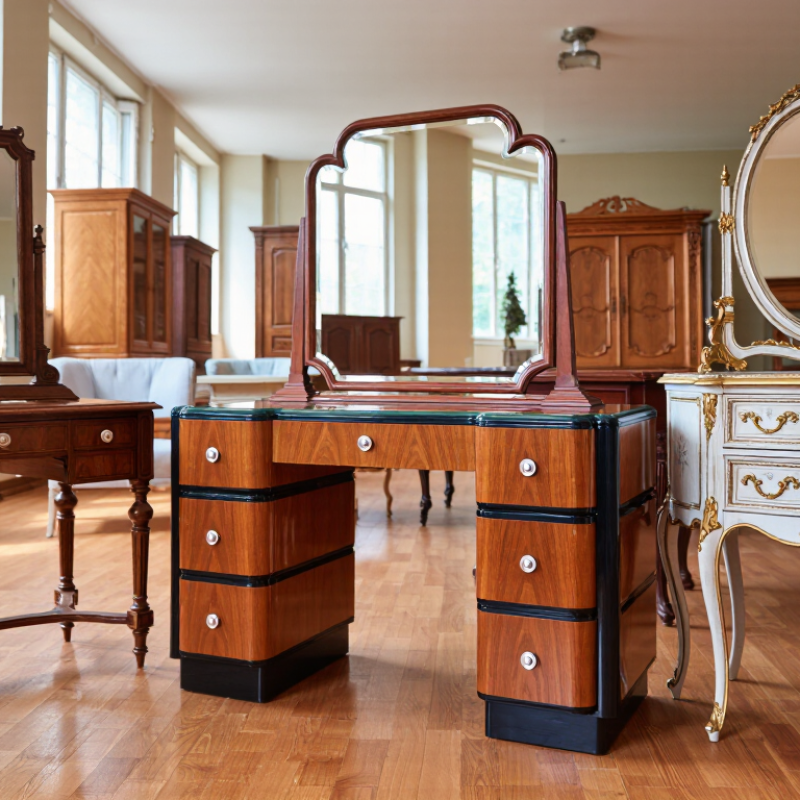
Antique specialist Eric Knowles offers a practical buying principle: “Buy what you like, and you can never go wrong.” Personal appeal still matters. However, professional evaluation must examine timber, veneer, mirror plate, hardware, joinery, provenance, and later alterations. A Victorian dressing table may show walnut grain beneath old wax. An Art Deco example may use geometric veneer and a stepped silhouette. French models often feature curved legs, painted surfaces, or ormolu details. Each style carries different restoration risks and shipping requirements.

This guide compares the leading Antique Dressing Table types for international buyers in 2026. It considers visual character, construction, age, maintenance, export documentation, and realistic resale expectations. Condition is never simple. A polished surface may conceal replaced veneer. An original mirror may contain foxing, silvering loss, or fragile edges. These imperfections can reduce convenience, but they may also support authenticity. Buyers should request detailed photographs, measurements, treatment records, and independent opinions before payment. No single style suits every room, budget, or climate. That is easy to overlook. (228 words)
2026 Top Antique Dressing Table Types for Global Buyers

Historical Styles That Define Antique Dressing Tables

2026 Top Antique Dressing Table Types for Global Buyers

Historical Styles That Define Antique Dressing Tables

Antique dressing tables reveal changing ideas about privacy, grooming, and domestic design. Georgian examples often use balanced proportions, darker woods, and restrained brass handles. Their drawers usually feel practical rather than decorative. Victorian dressing tables became more expressive, with carved mirrors, turned legs, and rich walnut or mahogany surfaces. Some include small compartments for brushes, letters, or jewelry.

Edwardian styles introduced lighter finishes and slimmer silhouettes. Curved legs, pale veneers, and floral inlays create a quieter appearance. Art Nouveau pieces may show flowing lines, botanical carvings, and asymmetrical details. These forms suit buyers seeking visual movement. However, not every attractive table is genuinely antique. I have seen convincing restorations mistaken for original work. Construction details matter more than surface shine.

Tips: Inspect drawer joints, veneer edges, mirror backing, and hardware together. Hand-cut dovetails can support age claims, but they are not absolute proof. Check for replaced feet, fresh glue, uneven fading, and modern screws. Ask for dimensions, repair history, and clear photographs before international purchase. A slightly worn finish can be honest. Excessive perfection deserves questions. Regional wood movement may also affect doors and drawers, especially after shipping between humid and dry climates.
2026 Top Antique Dressing Table Types for Global Buyers

Historical Styles That Define Antique Dressing Tables

This timeline highlights major historical styles commonly associated with antique dressing tables. Georgian design spans the reigns of George I through George IV, while Regency, Victorian, Edwardian, Art Nouveau, and Art Deco dressing tables reflect later developments in furniture design. Period ranges are based on established historical style dates and are intended as a reference for global buyers.

Key Features Used to Identify Each Dressing Table Type

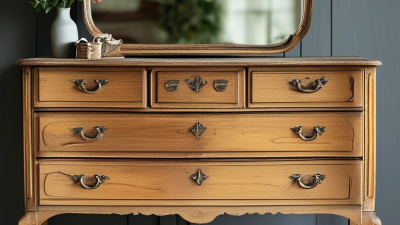
For global buyers in 2026, identifying an antique dressing table begins with structure, not decoration. A Victorian pedestal table usually has a central knee space and drawers on both sides. Turned legs, mahogany veneer, and brass pulls often support that reading. A bow-front table curves outward across the drawer fronts. Its swelling profile should continue evenly from top to base. Uneven curves may indicate later alteration.

A serpentine table shows alternating concave and convex curves, unlike the single outward sweep of a bow-front design. A Georgian dressing table may feature straight legs, restrained molding, and smaller drawers for grooming tools.

A trumeau-style table is recognized by a tall mirror frame, often visually connected to the lower case. Check whether the mirror and table share wood tone, joinery, and aging. They may not.

Experienced inspection goes beyond labels. Look beneath drawers for hand-cut dovetails, oxidation around hardware, old screw slots, and natural shrinkage. Machine-perfect joints can suggest replacement parts, though not always. Record dimensions, wood species, repairs, and mirror condition before purchase. Online photographs hide looseness and veneer lifting. A beautiful surface can conceal a heavily restored frame. Classification is sometimes uncertain. Ask for dated photographs and a clear condition report, then compare each feature with reliable regional furniture references.

Materials, Craftsmanship, and Construction Methods

Antique Dressing Table Materials and Construction for Global Buyers

In 2026, buyers should examine materials before admiring decorative details. Solid walnut, oak, mahogany, and pine each show different grain patterns and aging behavior. A warm, uneven surface often suggests hand finishing rather than factory uniformity. However, dark color alone does not prove age. Some older tables use veneers over stable timber, especially on drawer fronts and curved panels. Good veneer should follow the surface naturally, without obvious bubbles or lifted edges.

Craftsmanship appears in small, practical decisions. Hand-cut dovetail joints may have slightly irregular spacing, while machine-cut joints often look perfectly repeated. That difference is useful, but not conclusive. Skilled restorers can reproduce older details. Inspect the underside, drawer runners, screw heads, and backboards. These hidden areas often reveal more than polished fronts. A dressing table that rocks slightly may need careful adjustment, not immediate rejection. Still, loose joints, fresh filler, or sharp chemical odors deserve questions.

Construction methods also affect long-term value and daily use. Mortise-and-tenon frames usually provide stronger support than simple nailed connections. Floating panels can expand with humidity, reducing cracks across changing climates. This matters for buyers shipping furniture between regions. I have seen attractive tables damaged by rapid indoor heating and careless packing. That experience changed my inspection habits. Ask for close photographs, restoration records, wood measurements, and packing details. Measurements can be imperfect. Honest sellers should acknowledge uncertainty rather than promise flawless historical accuracy.

2026 Top Antique Dressing Table Types for Global Buyers - Materials, Craftsmanship, and Construction Methods

Antique Dressing Table Type Typical Historical Context Primary Materials Craftsmanship Details Construction Methods Common Surface Finish Mirror Configuration Global Buyer Considerations
Victorian Vanity Table Commonly associated with 19th-century Victorian interiors and formal dressing rooms. Mahogany, walnut, oak, or veneered hardwood; brass or gilt-metal fittings. Turned legs, carved aprons, molded edges, decorative brass handles, and figured veneer. Mortise-and-tenon frames, dovetailed drawers, glued veneer panels, and screwed hardware. French polishing, shellac, wax, or dark protective varnish. Central adjustable mirror, often supported by two side posts or a decorative frame. Check veneer lifting, drawer alignment, mirror silvering, and stability of turned legs.
Edwardian Dressing Table Early 20th-century furniture with lighter proportions and refined decorative detailing. Oak, mahogany, satinwood, ash, and selected veneers; nickel, brass, or pewter fittings. Inlaid lines, oval motifs, tapered legs, restrained carving, and balanced symmetry. Dovetailed drawers, framed back panels, doweled joints, and veneered carcass construction. Clear shellac, satin varnish, wax, or lightly toned lacquer. Tri-fold mirror or oval mirror with adjustable side wings. Suitable for compact bedrooms; confirm mirror hinges, replacement-glass options, and export packing.
Art Deco Vanity 1920s–1930s geometric design characterized by symmetry and streamlined decoration. Walnut, mahogany, bird's-eye maple, lacquered wood, chrome, brass, and glass. Geometric veneer matching, stepped profiles, contrasting inlays, and polished metal accents. Blockboard or hardwood frames with veneer overlays, dowels, screws, and mechanically fixed hardware. High-gloss lacquer, French polish, colored lacquer, or satin varnish. Large rectangular, stepped, or triptych mirror with geometric framing. Inspect lacquer crazing, veneer blistering, chrome corrosion, and the authenticity of replacement mirrors.
French Provincial Dressing Table Inspired by regional French furniture traditions, especially 18th- and 19th-century domestic interiors. Beech, oak, walnut, fruitwood, painted timber, and sometimes marble. Cabinet-style carving, cabriole legs, scalloped aprons, floral motifs, and hand-painted details. Hand-cut dovetails, mortise-and-tenon joints, pegged frames, and separately fitted drawer boxes. Painted patina, limed finish, wax, shellac, or muted distressed coating. Oval, rectangular, or three-panel mirror with carved or painted supports. Confirm whether distressing is historic or newly applied; marble tops require reinforced packaging.
Georgian-Style Dressing Table Based on 18th-century British formal furniture with emphasis on proportion and symmetry. Mahogany, walnut, satinwood, oak secondary wood, brass, and occasionally leather. Fan inlays, stringing, bracket or tapered legs, oval brass escutcheons, and restrained ornament. Hand-cut dovetails, veneered solid-wood panels, mortise-and-tenon frames, and wooden drawer runners. Shellac polish, wax, or traditional spirit finish that highlights wood grain. Swing mirror, shield-shaped mirror, or detachable dressing-glass unit. Evaluate replaced brasswork, structural repairs, woodworm evidence, and period consistency.
Art Nouveau Dressing Table Late 19th- and early 20th-century design featuring organic lines and natural motifs. Oak, walnut, mahogany, stained glass, pewter, brass, and carved hardwood. Whiplash curves, floral carving, flowing supports, colored inlays, and hand-shaped details. Traditional mortise-and-tenon joinery combined with shaped solid timber and veneered panels. Oil, shellac, wax, fumed-oak treatment, or softly toned varnish. Organic oval or irregularly shaped mirror framed by carved wood. Pay close attention to fragile carved elements, stained glass, mirror safety, and transport vibration.
Mid-Century Modern Vanity Generally associated with postwar modern interiors from the 1940s to the 1960s. Teak, walnut, oak, beech, plywood, laminate, brass, and steel. Clean lines, tapered legs, floating drawers, minimal ornament, and carefully matched grain. Doweled or screwed carcasses, plywood panels, concealed runners, and molded or laminated components. Oil, teak finish, satin lacquer, conversion varnish, or natural wax. Simple rectangular, oval, or frameless mirror, sometimes mounted separately. Verify original hardware, veneer condition, electrical modifications, and compliance of any integrated lighting.
Campaign-Style Dressing Table Portable furniture tradition developed for travel, military campaigns, and compact living arrangements. Teak, mahogany, oak, brass corner protectors, leather, canvas, and metal fittings. Brass-bound edges, recessed handles, folding sections, compact compartments, and practical detailing. Portable knock-down construction, brass screws, folding legs, fitted trays, and dovetailed drawers. Oil, wax, shellac, or durable varnish designed to protect frequently handled surfaces. Folding mirror, detachable mirror, or mirror concealed within a lift-up top. Useful where portability matters; inspect hinges, folding locks, brass fatigue, and load-bearing joints.
Buyer Assessment Note: For international purchasing, compare age verification, restoration records, timber condition, mirror safety, dimensions, moisture protection, packing standards, and import requirements before confirming an antique dressing table.

How Global Buyers Can Compare Condition and Authenticity

2026 Top Antique Dressing Table Types for Global Buyers

How Global Buyers Can Compare Condition and Authenticity

When comparing antique dressing tables, start with condition, not decoration. Inspect the top under side lighting. Look for lifting veneer, rippled polish, water rings, and dark cracks around joints. Open every drawer slowly. Original drawers often show uneven wear, hand-cut dovetails, and softened edges. However, unevenness alone proves little. Modern reproductions can imitate it. Record measurements, weight, wood species, and repair areas. Ask for clear photographs of the underside and back.

Authenticity needs several matching clues. Check whether the construction suits the claimed period and region. Examine screw heads, nails, drawer runners, mirror mounts, and aging beneath the finish. A new-looking back on a heavily worn front deserves questions. Request invoices, estate records, old photographs, or a signed condition report. Provenance is helpful, but paperwork can contain gaps. An independent furniture conservator should inspect expensive pieces before payment.

Compare listings using the same categories: structural stability, replaced parts, surface finish, alterations, and restoration cost. For global buyers, consider humidity changes, packing quality, insurance, and room dimensions. A table with honest wear may be safer than a polished piece hiding repairs. I learned this through disappointing purchases. No checklist is perfect. Ask how restoration changed the object’s character. Trust grows from specific evidence, not confident descriptions.

Choosing the Right Antique Dressing Table for Different Interiors

Choosing an antique dressing table begins with the room, not the marketplace listing. In interiors I have assessed, scale often matters more than ornament. A narrow Victorian table suits a compact bedroom with tall walls. Its turned legs add height without making the floor feel crowded. For a warm, traditional room, a walnut table with a framed mirror can echo timber doors and woven textiles. Check the mirror carefully. Old glass may show foxing, soft reflections, or small edge losses. These details can be attractive, but they require honest inspection.

A carved oak dressing table works better in a cottage or heritage-style interior, especially beside linen curtains and muted paint. Its heavier silhouette needs breathing space. Do not force it into a minimalist room. A simpler Edwardian or early twentieth-century design may fit better there, with clean lines and restrained hardware.

In contemporary interiors, contrast can be effective. One aged table beside a plain wall often feels more intentional than several decorative pieces. Oddly, too much matching can make the room look staged.

Before buying measure the wall, chair clearance, drawer depth, and mirror height. Allow enough space to sit without striking nearby furniture. Examine joints, veneer, handles, and signs of past repair. A replaced mirror is not automatically a flaw, but it changes the table’s history and value. Ask for condition details and clear photographs from several angles. I have learned that beautiful imperfections need boundaries. Worn finish adds character; unstable legs create risk and expense. Choose the piece that supports the room’s daily use, not only its photograph.